Nobody likes to think they're being played. Especially by someone in a nice suit who uses words like "fiduciary" and "diversification" and hands you a printed portfolio summary that somehow always looks reassuring even when your money is quietly going sideways.
Here's a number nobody puts in the brochure: 1% per year.
That's what a typical managed investment account costs. One percent annually of your total assets under management. Which sounds like nothing until you run the math over 30 years and realize that 1% — compounded, year over year, on a growing portfolio — can cost you hundreds of thousands of dollars. Sometimes more. Real money. Yours. Gone to fees.
And what do you get for it? In most cases, returns that don't beat a simple index fund that costs 0.03% a year. That's not a typo. Zero point zero three percent. The boring thing wins. Repeatedly. By a lot. The data on this is not subtle.
"The boring thing wins. Repeatedly. By a lot. The data on this is not subtle."
Here's the part nobody says out loud: you can be making money and losing money at the same time. If a broad index fund is averaging 10% a year and your advisor is netting you 6–8% after fees, your account is growing — and you're still losing. The gap between what you earned and what you should have earned is the hidden cost. Add their commission. Now let that gap compound over 20 years.
Worse, you're not learning anything. You're outsourcing the most important financial decisions of your life to someone who profits from your ignorance. They don't explain. They don't teach. They send you a quarterly statement with enough green to keep you comfortable and quiet. Ignorantly happy is exactly where they need you to be.
Ask one question: how does your return compare to the S&P 500 over the same period? Then watch what happens.
Now — to be fair — not all financial advisors are the same. A fee-only fiduciary advisor who charges a flat rate and has a legal obligation to act in your interest? Potentially worth it at certain stages of wealth. Someone who earns commissions on the products they sell you? That's a different conversation entirely.
The problem is most people can't tell the difference. They sit across from someone who seems knowledgeable, who has a nice office, who says things that sound smart, and they sign paperwork they don't fully understand. Because the alternative — figuring this out yourself — sounds terrifying.
It isn't. That's the con.
Index funds. Low fees. Time in the market. Automatic contributions. That's the whole strategy. It doesn't require quarterly meetings or a printed packet with pie charts. It requires patience and the willingness to be bored while your money grows.
My father had a financial advisor for years. Conservative allocations. "Safe" returns. He was losing ground and didn't fully realize it until he started reading, asking questions, and taking control. He was in his 30s. He had time to course correct.
Some people don't find out until much later. That's the expensive part.
Ask your advisor how they're compensated. Ask what their returns have been compared to the S&P 500 over the last 10 years. Watch their face. The answer will tell you everything.
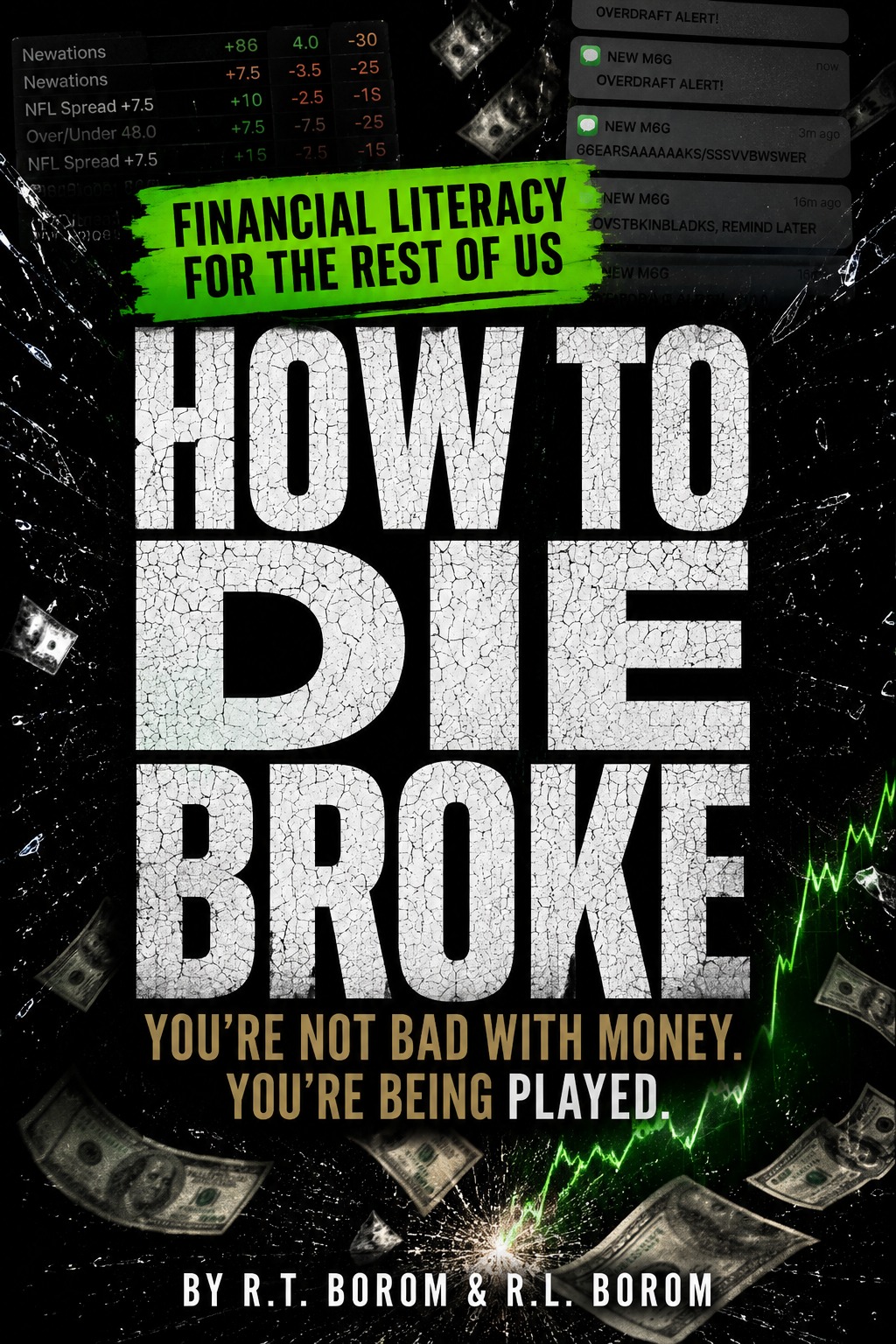
How to Die Broke — the book about what the financial system doesn't want you to figure out on your own.